











 Supplement quiz





Dog food
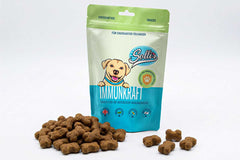
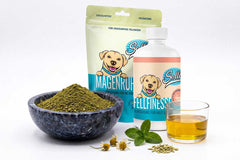
47 productsDry and wet food for puppies and adult dogs, both gently prepared and openly declared. Plus treats for training and rewards, and powders and oils to complement the bowl in a targeted way. Everything grain-free, without sugar and without artificial flavourings, colourings and preservatives. For sensitive dogs there are dry food varieties with just one animal protein source.


24 von 47 Produkten
Weitere Produkte anzeigen (23)Which dog food suits your dog?
Tap what matters most to you both and we'll show you the right varieties. All grain-free and transparently declared.
What are you looking for?

Extra energy for growing up
Junior varieties with more nutrients and energy for a good start in life.
 Chicken Regular PuppyA gentle start with chicken
View
 Salmon Regular PuppyWith quality salmon
View
 Turkey Minis PuppySmall kibble for Minis
View
Perfectly sized for Minis
Smaller kibble that little mouths can manage easily, in popular varieties.
 Chicken MinisThe chicken classic
View
 Beef MinisHearty Angus beef
View
 Salmon MinisScottish salmon
View

Gentle on intolerances
Varieties with just one animal protein source, ideal for sensitive dogs. All varieties are grain-free.
 Horse RegularHorse as a novel protein
View
 Duck RegularDuck as the protein source
View
 Lamb MinisLamb for small breeds
View

Our most popular varieties
Balanced everyday varieties for adult dogs of regular size.
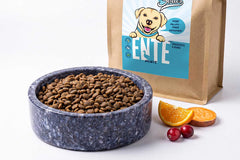
 Chicken RegularThe all-rounder with chicken
View
 Beef RegularSavoury Angus beef
View
Duck RegularDuck as the protein source
View
Fish for a shiny coat
Fish-rich varieties and salmon oil with omega-3 for skin and coat.
More in the guide
Juicy and especially tasty
Moisture-rich, gently prepared wet food, ideal for fussy eaters.
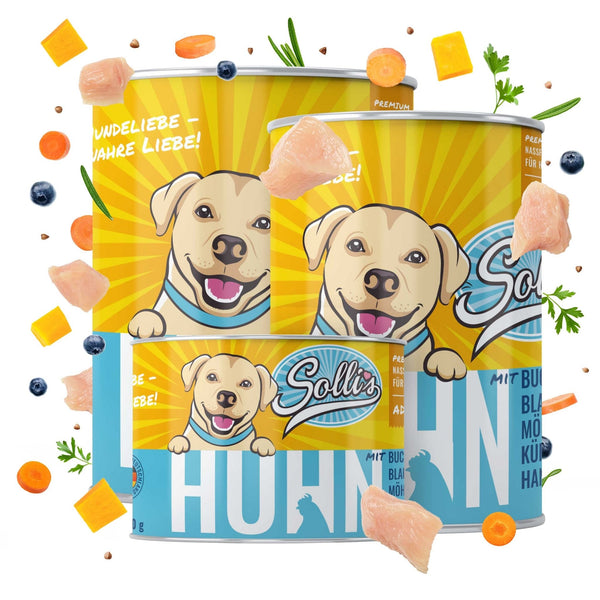
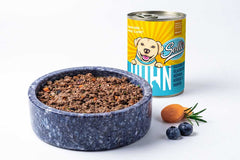
 Wet Food ChickenTender chicken
View
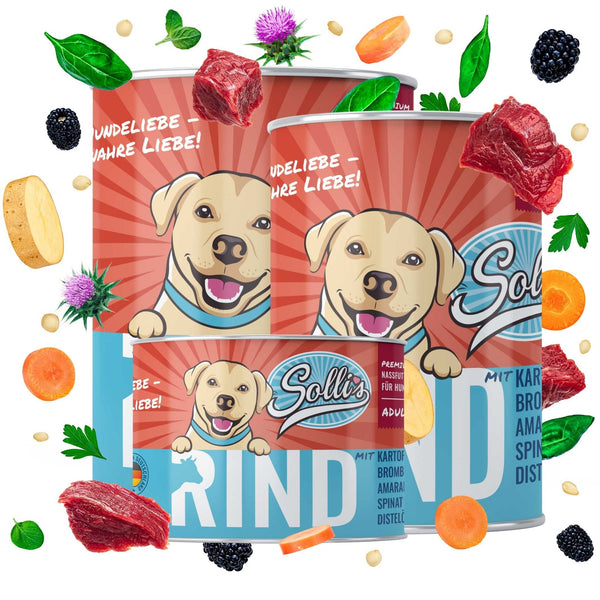
 Wet Food BeefHearty beef
View
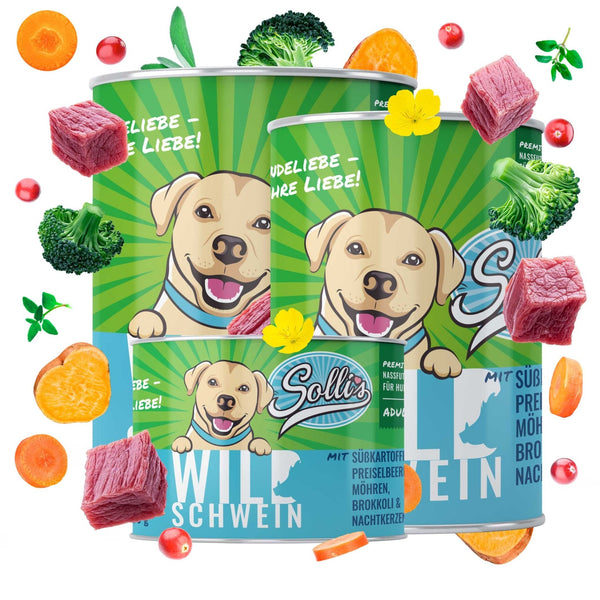
 Wet Food Wild BoarWild boar, something special
View
Dry food or wet food with chicken?
Both with chicken and grain-free. The difference lies mainly in feeding, moisture content and handling. Here's how to find the right one for your dog.
| Comparison | ||
|---|---|---|
| Price | from 22,99 € | from 2,29 € |
| Unit price | 11,50 €/kg | 11,45 €/kg |
| Rating | (12) | (101) |
| Best for | Everyday, any breed, easy to portion | Moist meal, for fussy eaters |
| Main ingredient | Chicken, grain-free | Chicken, grain-free |
| Feeding | Smaller daily amount, easy to store | Larger portion, high moisture content |
| Preparation | Gently cooked at around 82 °C | Gently prepared |
| View product | View product |


Many dogs get a mix of both, for example dry food as the base and wet food as a topper. Our product advisor helps you find the right daily amount.
The big dog food guide: how to find the right food
The right dog food suits your dog's age, size, activity level and tolerances. Quality matters more than the question of dry or wet: clearly named types of meat, a complete declaration and no unnecessary fillers. At Solli's, every variety is grain-free, sugar-free and gently prepared. This guide takes you step by step to the right choice.
How can you recognise good dog food?
Good food doesn't win you over with colourful packaging but with its ingredient list. These points help you assess it:
- Named meat content: It should be clear which animal is inside, such as chicken or beef, rather than just generic animal by-products.
- Complete declaration: The more openly the ingredients are broken down, the better you can judge what ends up in the bowl.
- No sugar or unnecessary fillers: Additions that only bulk up the volume don't belong in the food.
- Matched to needs: Age, size and activity all shape nutritional requirements.
You'll find which individual foods are safe or off-limits for dogs in our big food list.
Dry food or wet food?
Dry food goes a long way, is easy to portion, keeps for a long time and is a little kinder to teeth thanks to the chewing. Wet food has a high moisture content and a stronger smell, which often makes it the better choice for fussy eaters or pets that don't drink much. The two are easy to combine, for example dry food as the base and wet food as a tasty topper.
The right food for each life stage
Nutritional needs change with age. Puppies and young dogs need more energy, protein and minerals for growth, spread over several small meals. More on this in our puppy guide. Adult dogs do well on a balanced adult variety. Older dogs often move less and then need fewer calories, but easily digestible ingredients.
Small and large breeds
Small breeds struggle with large kibble, which is why we offer our Minis with a smaller kibble size. Large breeds have higher overall needs and benefit from calm, unhurried feeding. For very active or heavy dogs, it's also worth keeping an eye on the joints.
Grain-free: sensible or marketing?
Grain-free isn't automatically healthier. Most healthy dogs tolerate grain well. Grain-free food makes sense above all if your dog is sensitive or you prefer a particular carbohydrate source such as potato. What matters in the end is overall quality. Our varieties are grain-free, but for us that never comes before gentle preparation and a clean recipe. You'll find an honest assessment in our guide to grain-free food.
The right protein source, especially for sensitive dogs
If your dog reacts with itching, recurring digestive problems or intolerances, a food with just one animal protein source can help. Novel proteins such as horse or duck, which your dog doesn't know yet, are particularly interesting here. If a true allergy is behind it, an elimination diet carried out with your vet will identify the trigger. More background in our allergy guide.
How much food does my dog need?
The right amount depends on weight, age and activity. As a guide, you'll find a feeding recommendation on every product page, and once you've filled in a pet profile, we'll show you the right daily amount for your dog straight away. The guide How often to feed? explains how many meals make sense. Keep an eye on weight: a visible waist and ribs you can feel easily but that don't stick out are a good benchmark.
Switching food the right way
A food transition works best slowly over seven to ten days. First mix a small amount of the new food into the usual one and increase the proportion every day so that digestion can adjust. You'll find step-by-step instructions in our guide Switching dog food.
Common feeding mistakes
- Switching too quickly: An abrupt change often leads to soft stools.
- Too many treats: Snacks count too. As a rule of thumb, they shouldn't exceed a small part of the daily ration.
- Table scraps: Seasoned or fatty food puts a strain on the stomach and can be harmful.
- Leaving food out all day: Set mealtimes help digestion and make it easier to keep track of the amount.
Storage and freshness
Store dry food somewhere dry and cool and keep it well sealed, ideally in its original packaging or a clean, airtight container. Opened wet food should be covered, kept in the fridge and used up within a few days. That way, taste and nutrients are preserved.
When to see the vet?
Food is the foundation, but it doesn't replace treatment. If diarrhoea or vomiting persists, your dog refuses food for more than a day, loses weight for no reason or seems noticeably lethargic, have it checked by a vet. You can read about what else helps with stomach and gut issues in our digestion guide.